| Readwise URL | https://read.readwise.io/read/01kt2ksgq3bvm10jmg46htdq5f |
|---|---|
| Readwise ID | 01kt2ksgq3bvm10jmg46htdq5f |
| Date | 2026-01-28 |
| Author | youtube.com |
| Category | video |
 \n\nSource: https://www.youtube.com/watch?v=RPM4ImzcIFc
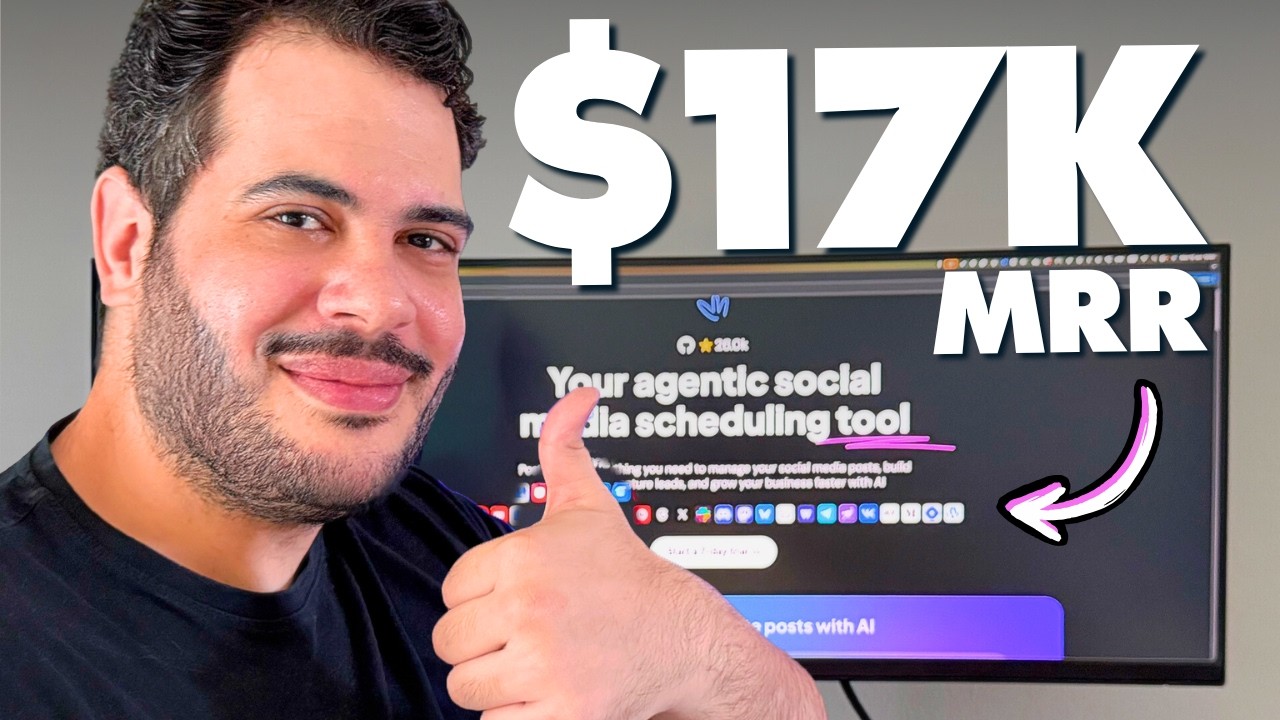
Here is everything I know aboutmarketing in open source.This is Nevo. His app makes $17,000 amonth thanks to two words: open source.Open source is a way to introduce yourproject to millions of developers.While you may be familiar with theconcept of open source software, what isnot talked about enough is how buildingan open source project can actually get youaccess to thousands of users and helpyour software stand out in a sea ofcompetition. Thanks to open source, myapp has been downloaded 5 million times.
I asked Nevo to come onto the channeland explain all of this to me along withhis full open source playbook, includingthe one secret to actually crushing itin open source, his step-by-stepplaybook on exactly how to have an epicopen source launch, and how he wouldstart over building anything in opensource in 2026. All right, let’s getinto it. I’m Pat Walls, and this isStarter Story.
Real quick, Nevo is about to break downhow to make it in open source. And look,this episode is not about building, it’sabout distribution, which if you watchthis channel, this is the story we hear.
Over and over and over. This is what itactually takes to build a successfulbusiness. If distribution is somethingthat you’re serious about, I puttogether a quick resource for you calledthe Niche Communities Playbook. Inside,we’ve got tons of data and examples onhow to promote your app on places likeReddit, Facebook groups, X, open source,and dozens of other marketing channelsthat founders are actually using to growtheir business today. If you want it,just go ahead and grab it for free rightdown there below in the description. Butotherwise, let’s get into the interview.
All right, Nevo, welcome to the channel.Tell me about who you are, what youbuilt, and what’s your story. Hi, myname is Neo, and I built the biggestopen-source social media scheduling toolthat allows you to schedule your postsfor 25 social media platforms, with a lotof help from AI. Post is currently making$17K per month. One of the reasons forPost’s success is being open source, and Ithink this is a great opportunity forany builder trying to build an appin 2026. I’m super excited to tellyou about it and how you canachieve huge growth when you go open source.
Okay, open source. I’m excited to talkabout it today. Before we get into allthat, can you just show me what youbuild, what’s the business model, andthen maybe pull up some of the revenuedashboards so we can show that this islegit.
So, we are Posties, an open-source socialmedia scheduling tool. This is our mainlanding page. We support the largestnumber of social media channels, 25.Posties operates on a SaaS model. We havea few packages: standard, team, pro, and ultimate, verysimilar to other social media schedulingtools. Depending on the tier that youchoose, you get different amounts ofchannels and different features. We wantpeople to use the standard package,but we also want to upsell people to theother packages based on features and notonly based on channels. So, our revenueis currently at 17K MRR. We have 472subscribers. We have a very high churnrate that we’re trying to reduce right now to19%. We’re getting 3,830trials since August 25. Our trial toconversion rate is 21%. So our open sourceis the same as our SaaS offering.Developers can come and self-host.
This can be done on their machine, and they will needto do all the hard work. They will needto go approve every provider with anysocial media, and they can just use it ontheir computer. There is no difference,and there are different open-sourcemodules between companies, but for us,there is no difference between the opensource and the cloud offering. You canself-host Postis. We put a lot of documentationon how to self-host it. Opus is a reallygreat way to penetrate into new marketsbecause it’s just like a blueocean among all these flooded millionsof companies. For example, Postisis a social media scheduling tool. Wehave tons of alternatives if you look forsocial media scheduling tools;thousands exist, yet we are managing to growour revenue and put our face out there.
It’s just another way to penetrate themarket, be transparent, and get fastfeedback. Okay, let’s get into a littlemore about open source and yourbackground. How did you get into thisopen-source space and eventually buildan app that’s doing 17,000 MR? I was notan open-source person overall, just adeveloper for many, many years, but Iwas working in a co-working space, and II met some cool people who were buildingan open-source infrastructure toolfor sending notifications. I joined acompany and I was with this company for 2years. We went from zero to 32,000 starsand I’ve never seen growth like thatbefore in open source in my life. RightAfter that, I saw more and morecompanies going open source. So in thesecond year, I started to do a lot ofniche consulting becauseI was the only person talking about it.
I worked on that for around a yearand doing so many consultations justfreaked me out. The stress from doing somany meetings and talking to so manypeople made me want to go back to what Iliked the most: building products. Thisis when I started to build Hosties, an opensource product, and everything elseI’ve built so far is open source.
Neo’s story is pretty unique, right? Hegrew his open source project to $17,000a month purely through marketing in opensource communities. And if you knowanything about open source communities,it’s that they love transparency. They’llgrill you about security and compliance.They might even ask you questionsabout SOCK 2 compliance and ISO 27001.
Terms you might not even be familiarwith. And when you don’t have answers tothose questions, suddenly you’respending days filling out forms insteadof building your product. Well, that’swhere Delve comes in. Delve is the firstAI native compliance platform builtspecifically for fast-growing startups.Their agents help you handle therepetitive stuff, monitoring your techstack for security gaps and autofillingsecurity questionnaires so you don’thave to. Thousands of fast-growingstartups trust Delve to get compliantfast. Delve is offering an exclusive$1,000 discount just for Starter Storylisteners and you won’t find this dealanywhere else. So, if you’re ready toget compliant without the headache,check out Delve in the link in thedescription or go to delve.co/starterstory. Thanks to Delve for sponsoringtoday’s episode. Let’s get back to thestory.
All right, so you’re kind ofgoing deep on this idea of open sourceand marketing and the combination of thetwo, but I do want to take a step backand just talk about the opportunity ofopen source right here.
In the world of software, there are so manypeople building different things. Tell me aboutwhy you think open source is such a greatplace to be building right now in 2026.I think today, everybody can literallybuild almost anything. This is why thisshould be the year of open source comparedto previous years, because everything that youcan build, somebody else can build. So whynot go open source? The market is alreadyflooded. There are already so manycompetitors, like tons of SaaS goingout every day compared to a few yearsago. You need to find somedifferentiation with what you build. So,open source is a great way to introduceyour project to millions of developers.
Developers are not a buying persona, andthey will probably not pay you. So don’ttry to find some elaborate way to makethem pay you. You just need to createvery good documentation and ensure theyknow how to use your SaaS. You can lookat this as kind of like a free tierto your SaaS. You don’t charge for anyusage because people just deployit on their own computers and useit, perhaps with their customers and so on.
So, developers will not pay you, but hereis what they will do for you. They willhelp to build your brand. They will talkto a lot of people. Maybe they areworking in a company where there areother people that are not developers, and they are looking for asolution right now. Okay, I know thisthing. So, word of mouth is a reallygreat channel. Tons of user-generatedcontent on social media. So every time Isearch for Posties on socialmedia, every day I see some post aboutsome developer trying to sell Posties.You get tons of developers actuallycontributing to your product, so Ican’t say that it’s making you moreproductive when people contribute toyour product, but it gives you tons offeedback and lets you find bugs muchfaster, iterate on them, and find newfeatures because they are actually partof your community. They are like advocatesfor your product. Except for that, you canstart to see a lot of blog posts aroundwhat you are building, so I see tons ofSEO just from people writing about howto use Posties or putting a review aboutPosties somewhere. There are also tons ofDifferent directories that have a veryhigh domain authority and domain rankingare great for SEO. It also increases yourcredibility in general, as fromnon-developers. They come, they see there
is a GitHub repository, and there were contributions notmade so long ago. There is a commit justmade a few days ago. They can see thatthe product is actually active. And thenthere is one thing many people do,and this is usually where the biggestmoney lies in open source, and it’sself-hosting enterprise support. Soimagine, for example, I build a socialmedia scheduling tool, but I’m dealingwith an enterprise that will never puttheir information outside. They willprobably want to self-host this, but theywill also need support. And this isusually where most of these companies— the funded ones or the ones thathave enough motivation to do enterprisesales — find money. So you shouldn’t beafraid to go open source. Don’t beafraid of somebody copying your productbecause today, the only thing that iswinning usually is brand. And I’ve seenso many people come, copy, post thisand self-host it somewhere as a totallydifferent solution, just competing withI was stressed, and afterchecking this one week, two weekslater, I saw that they just abandoned theproject because there is no way that youare the brand. You are the one thatcreated this open-source solution.
Anybody that competes with you willalways be one step behind you andprobably just abandon it at some point.
I mean, I agree 100%. In a world whereAI can write any code and is actuallyprobably referencing open-source codeitself to write that code, what is thevalue of code anymore? There’s reallynot a whole lot. As you said, it’sabout brand, and open source is a great wayto build a brand, especially as abootstrapped builder where you’reessentially getting free distribution. Ireally like this model. If you were tostart over today and maybe go into adifferent category, maybe it’s notsocial media schedulers, what would beyour advice or your playbook for someonewho wants to start out in open sourceright now in 2026?
So, I have my own playbook, and this iswhat I’ve done with so many companiesI’ve worked with while I didconsulting, and I’m just going to shareMy entire playbook of what I did. So, here is what you need to do. Firstof all, you need to start a preparationin a normal marketing way. Your GitHubshould become your landing page. That’s likeyour marketing landing page. So, youshould treat it the same way as youtreat your main website, even better. Youcan just literally go to the postrepository and look at how I built it. Ifyou’re trying to create somethingcompletely new, write everything to helpmake people understand what you built.
If you already have an alternative, thebest way to do this is to write that you arean open-source alternative to somethingthat gives the fastest context to peopleto understand what you’re building. Thenadd your license to the project. If youhave three main licenses for open source,which are MIT, Apache 2, and AGPL3. So,really check what license you want to gowith. Then you want to go and createsome issues on your GitHub repositoryfor different features you want people tocreate for you. Developers that cometo your GitHub usually don’t knowexactly what you’re building. They don’t
have in mind exactly what they’re goingto work on. If you create an issue forFor many, it’s a lot easier to justcome in and ask, “Can you please assign me to this issue?” That’smuch easier to get code faster thanhaving people figure out what to open for you. You want to open a Discord serverso developers can join quickly. Go to Discord,just copy the channels listthe same way I did. Make sure youhave documentation for developers to know how todeploy their project. This is superimportant. If they don’t know how todeploy their project, they will churn.
They will not clone your repository,and you will not becometrending. It’s much better to create aDocker for your project. If you haveDocker, the deployment is much easier.This is everything you need to do for the open source part.
Step number two is bringing trafficto your project. As I said before,you want to get into the main GitHubtrending feed. To do that, you wantto get as much traffic as possible inthe shortest amount of time. This iswhat I call the launch, and to get as muchtraffic as possible. To prepare for yourlaunch, you will need a few accounts invarious places.
To HackerNews, like two weeks beforehand.You also want to register for Reddit, buttry to do a little bit of work first.Get your karma up a little becauseif you don’t have karma on Reddit, youwon’t be able to post there; almost allyour posts will be filtered. Then youhave something you may have neverheard of before, called Lei. Thisis an alternative to Reddit. They’re notreally good at anything else except foropen source for people who want to domarketing. But with open source, theyare exceptional. Every time I post somethingon Lei, it gets at least 100 upvotes. It’s a great way to promote your stuff.Lemie is a self-hosted Reddit. Thelast ones are Devo2, Medium, and Hackernon.
Those channels are not only for SEO;they can bring you direct traffic, andI’ll talk about them. So the first thingyou want to do is write an article indev.to, Medium, and Hackernon. You want towrite an article about how you builtsomething inside your open source, orthat you just launched your open sourceproject about this, this, and this.
Later on, you can also write listicles like “Top10 open source projects you should checkin 2026.” These are not super focused, butThey can give you stars and make youtrending, which is the whole goal of thestrategy. There’s something called theGoogle Discover feed. The GoogleDiscover feed shows articles of thingsthat you are interested in. If you checkmy articles on Dev.to, Medium, and Hacker Noon,this is the main traffic source for allof them. I get tons of traffic fromthese places. So, this is why it’s superimportant that you invest in your titleand cover picture. The same thing applieswhen you’re working on your YouTubevideos because people are just going to see theDiscover feed.
Step number three: register on Hacker News. Create a newpost. Just submit. Write “Show space” andthe name of the project that you haveand then link to your GitHub repository,not your main website. They are verypicky about the things that they like toput inside. It’s not guaranteed that youwill get there, but Hacker Newsloves open source projects. If you putyour open source project inside, thereis a very high chance you will getinto the main feed, and then you canexpect almost like 10,000 views.
Step number four: go to Reddit and post it on/r/selfhosted. If you are not open source,If you want to post your projectsomewhere on Reddit, you will probablyget filtered or banned becauseself-promotion is prohibited. But thenice thing about open source is that ifyou have something open source andyou go to self-hosted, people are justwaiting for you to post there and promote yourself. Notonly that, every time you have a newversion, people want to see it again andagain and again. Your goal is just to gothere to self-hosted and write a post.
Here is an example of a post, and everytime you have a new version, you canrelease it again and write all thefeatures and everything that you haveinside. Make sure you ask for a star.Ensure you’re super humble, down toearth. Do it like building in public.Use “I,” not “we,” and post it every monthin /r/selfhosted. That at least was myapproach. There are some other channels youcan cross-post to, like r/web/r/programming. If you are in the AI space,you can use r/askamanager or r/agents.Step number five is toget traffic from everything elsethat you have. Now, this is step number five because you might notIf you have any, put it on X,LinkedIn, your newsletter, and sendeverybody to your GitHub. Make sure allthese five steps are going on at thesame week. That’s very important. So,you get into the main trending feed.
Once you are there, you will see yourstar count rocketing very fast. You willsee a lot more people joining yourDiscord, and you will see a lot moreissues, pull requests, and forks for yourrepository. And that’s my playbook to doevery week in open source to grow myproject.
What I love about Neo’s storyis that he turned open-source into anasset. He got thousands of GitHub starsand that ultimately helped grow hisbusiness to $17,000 a month. He did thisby going deep into niche open-sourcecommunities, subreddits, Hacker News,Lemi, Dev.2. But he wasn’t just postingrandom stuff everywhere. Hestrategically targeted channels wherehis users were actually hanging out. Andthat made all the difference.
This is exactly what we break down in theStarter Story Build niche communitiesplaybook. It’s a free resource thatshows you exactly how to find andYour product. You’ll learn how to marketyour idea and find the communities whereyour customers actually are. Moreimportantly, the playbook is packed withreal examples from real founders thatwe’ve talked to through this channel onwhat’s actually working right now. So,if you’re ready to take distributionseriously and get real traction on yourproduct, head to the first link in thedescription to get the starter storybuild niche communities playbook forfree. All right, let’s get back to thevideo. Okay. Wow. I mean, that was anamazing playbook of how to truly crushit with open source. So, that wasawesome. Thanks for sharing all that.
I’d love to switch topics a little bitand have you just show off your app. I’mnot sure if this is the self-hostedversion or the SaaS version. Curious tohear that, but also can you just show mewhat your app does and how it works andmaybe how it might be useful to someonewho’s watching this.
So, here we can see the main Postiesdashboard. Very similar to many othersocial media scheduling tools. Here areall my social media channels that I haveconnected to Posties. When you add a newIn Posties, you can find thatthere are 25 channels. It’s the biggestof any other platform. And then youcan just schedule posts into the future. I canclick here. I can create a set ofpre-made posts if I want or not. I can justselect all the social media platforms I want to post to. I canwrite some text and I can also addcomments and posts if the platform supportsthat. I’m managing all of that. But if I want, I can just edit thecontent for a specific platform and changehow it will look on that platform.
I put a lot of effort into the UI.So I hope it looks good. You havedifferent settings for different socialmedia, like Instagram. You can post a reel or aregular post, and then you can just edit to thecalendar. So you can see all of them arealready here. So we have all the draftsof them. You can now change themto a different date and so on, and usethis basic functionality of every social mediascheduling tool. Then you have someextra features such as AI tools. You cancreate media designs. You canuse AI images. You can use AI video, andyou can bold your text and so on.
We also have the public API, and this is what a lot of people use. Because we are open source, more developers prefer to use us instead of using non-open source solutions. So you have your public API key, and then you can automate social media posts in your workflow if you use NA10 or just the API to do different tasks.
Thanks for sharing that tool. I mean, that looks really impressive. It’s super cool that this is not only open source, but also a product that you can post to all these different platforms at once. I want to understand a little bit about how you actually built this product. What’s the tech stack? What does this run on? And what tools do you use to run this business?
So for hosting, we are using Railway for the backend and for the main marketing website. I use Vercel only for the Next.js application. I don’t use the Vercel API; we’re using our own backends. I use Semrush for SEO and Ahrefs only for the dashboard. I don’t pay for the entire product — it’s only $20 per month. We send a lot of emails when posts are posted with resends.
I use Cloudflare R2 for hosting. I also use Dub.co for …
Short linking and also for the affiliateprogram. Flossible for analytics. AIgenerators for images or textwith OpenAI KI and FAI. This is mybiggest expense. I use something calledtranslated. I want every post to beposted. I don’t want any failures. Thatmeans that I need to convert videos tothe right size for the social mediaplatform that I’m going to post to. Ifnot, it will just fail. I’m paying $600for that. We use Outrrench for SEO, oneSEO article every day. I use Corser forAI. I’m only paying $20. I’m not a heavyuser. I’m using WebStorm as the IDE. Weuse Beehive as the email newsletter.It’s a headless hack. Discord forcustomer support is $0. GitHub Copilotis free for open source. Sentry formonitoring bugs and crashes is alsofree for open source.And we use GitHub action to run testsand build Docker versions, free for opensource. And the margins are around 80%.
Okay. Well, thanks for sharing. I mean,very profitable business, super cool.Thanks for sharing all that. Lastquestion that we ask all founders whocome on starter story, if you could goback in time before you built thisIn business, what advice would you giveyourself or what advice would you giveanyone who wants to do what you do,build an open source SaaS in 2026?
My biggest advice is, I think, a littlebit controversial. I think you shouldlearn a lot before you build. But youshould also avoid getting into ananalysis paralysis state. I had so manyfailures in several startups at first,and then I just paused and said,“Okay, let’s read some books. Let’s readabout traction for marketing. Let’s readabout Alex Hormozi’s $100 million deals. Let’sread about Russell Brunson’s leadgeneration.” Then I started to makesmarter decisions. It’s really importantto learn the basics, and it’scrucial to understandthe idea that you’re going tobuild. I’ve seen a lot ofpeople go out who may have never heardabout anything before and just startwith a B2C model, which is usually harderfor people who don’t excel indistribution. Then they don’t knowwhat to do, grind for a year,and eventually close, only to realizeafterward that they should have gone B2B.
It’s really important that you learn.You should focus your time—half of the time learning, half of the time creatingsomething. Learning is the biggestpower.
That’s great advice. Thanks for comingon and sharing this amazing business.You built this open-source opportunity.That was awesome. So, thanks for comingon, and I hope to see you again soon.
Thank you for having me.All right. Thanks to Neo for coming onto the channel. Nevo built a socialmedia poster. I’m sure you can thinkof a bunch of other social mediaposters that already exist. This isjust another example to show you thatyou don’t need to reinvent the wheel tobuild something successful.
When it comes down to it, distribution canchange the game. Something likehaving your angle open source in thisspecific example can really make thedifference. But it always starts withbuilding something. If you’re readyto build your idea, you definitely wantto check out Starter Story Build. It isour boot camp where you will come upwith an idea, build it, launch it, and get it in theHands of real users in just a coupleweeks. Our next cohort is starting soon,so head to the description and clickthat link and you can get startedbuilding your thing right now.
All right, that’s it for this episode.Thank you guys for watching. We’ll see you inthe next one. Peace.