| raw | raw/the-app-i-built-in-12-hours-makes-15k-month.md |
|---|---|
| url |
TL;DR
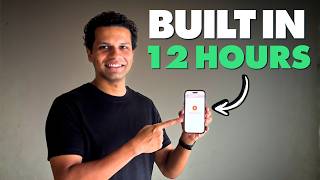
Part-time indie hacker Lewis built the MVP of Audio Pen—a B2C voice-to-text AI transcription and rewriting SaaS—in just 12 hours during an online hackathon. By launching a simple product that solves a single painful problem exceptionally well, building in public on Twitter, and deploying non-recurring subscriptions, Lewis scaled the app to $15,000/month in secondary income.
The Founder’s Story
Lewis runs his family’s offline brick-and-mortar business full-time in India. In 2015, he dabbled in no-code but stepped away. He returned to the online space in 2021, discovering Bubble.
Over the next few years, Lewis built 15 to 20 different web applications, all of which flopped. Rather than getting discouraged, he realized that high failure rates are natural in indie hacking, and the low cost of modern software experimentation makes high volume the best path to success.
The Building Process
To force himself to launch quickly, Lewis organized an online hackathon called Halfday Build on Twitter. The challenge was simple: go from idea to MVP and actual revenue in exactly 12 hours (starting at noon, making $1 by midnight).
During one of these sprints, Lewis built Audio Pen as one of four tiny tools on his personal website:
- Users tap a massive record button on-screen to talk.
- The app transcribes the audio input (up to 15 minutes for premium users).
- It leverages an LLM to clean up “fuzzy thoughts,” restructure sentences, and rewrite the text into a clean writing style of the user’s choice.
The Launch & Marketing Strategy
Lewis’s quick validation and subsequent scaling followed a highly practical, lean playbook:
- Build Hype in Public: Lewis shared his Figma design templates and ideas on Twitter prior to building the code, gathering visual feedback.
- Collect Instant Beta Sign-Ups: Ten hours into the 12-hour hackathon, he launched a basic waitlist form.
- Unprompted Stripe Payments: Beta testers who signed up were redirected to a page that contained a Stripe payment link. Without Lewis actively asking for money, users began paying immediately because the tool hit a massive, underserved need (writer’s block and meeting summaries).
- Indie Identity Advantage: Lewis advises solopreneurs to act like humans rather than pretending to be large corporations. Users love supporting a single founder’s journey, which builds deep customer empathy and loyalty.
- Differentiate via Pointy Features: Instead of bloating the software with adjacent features (which many concurrent AI apps did), Lewis focused exclusively on doing one single task (structured voice cleaning) better than anyone else.
- Non-Recurring Yearly Pricing:
- $99 for 1 year
- $159 for 2 years
- Tactic: These are non-recurring subscriptions, giving customers full control over renewals and completely eliminating subscription chargeback complaints.
Exact Tech Stack
- Web App Builder: Bubble (costing $130/month)
- Backend & Logic Database: Xano ($260/month)
- Native App Wrapper: Draftbit ($300/year)
- Email Delivery: Loops ($800/month)
- Analytics: Plausible Analytics ($19/month)
- API Integrations: OpenAI Whisper & GPT API (costs vary by LLM usage)
Key Stats & Metrics
- Monthly Revenue: $15,000/month in secondary income
- Total User Base: 200,000 registered users
- Paying Customers: Over 5,000 active customers
- Initial Dev Time: 12 hours
- Previous Failures: 15 to 20 failed web apps
Key Tactics & Insights
- Pointy Feature Focus: Solopreneurs should build “pointy” apps—micro-SaaS tools that solve one highly specific problem perfectly. Feature bloat distracts founders and confuses users.
- Fail Fast, Learn Faster: Do not waste months building an MVP. Build small, experimental utilities that can be easily abandoned if they receive no organic signal. Reallocate your time to the tools that get traction.
- Leverage the “Halfday Build” Mentality: Setting a strict, artificial 12-hour timeline forces you to compromise on unnecessary features and launch the absolute simplest functional version of your product.
- Human-to-Human Marketing: Be completely transparent about your solo status. Building in public and sharing personal milestones makes customers feel like they are investors in your personal story.
- Non-Recurring Subscriptions: Selling high-ticket, non-recurring annual licenses is an excellent way to capture upfront cash flow while reducing billing complaints and refund overhead.
- Pinterest for UI/UX Inspiration: Lewis gathered design patterns from Pinterest and designed the interface in Figma before building, highlighting that beautiful, minimalist design is a key product differentiator.
Related Frameworks & Playbooks
- micro-saas — Hyper-focused single-purpose SaaS and niche monopolies
- idea-validation — Landing page buy buttons and paid intent testing
- mobile-app-monetization — Paywall optimization, hard paywalls, and pricing metrics