| Readwise URL | https://read.readwise.io/read/01kt2ktb3n3xd0m1sh4dqm59aq |
|---|---|
| Readwise ID | 01kt2ktb3n3xd0m1sh4dqm59aq |
| Date | 2025-07-24 |
| Author | youtube.com |
| Category | video |
 \n\nSource: https://www.youtube.com/watch?v=ZGwQoRw7mh8
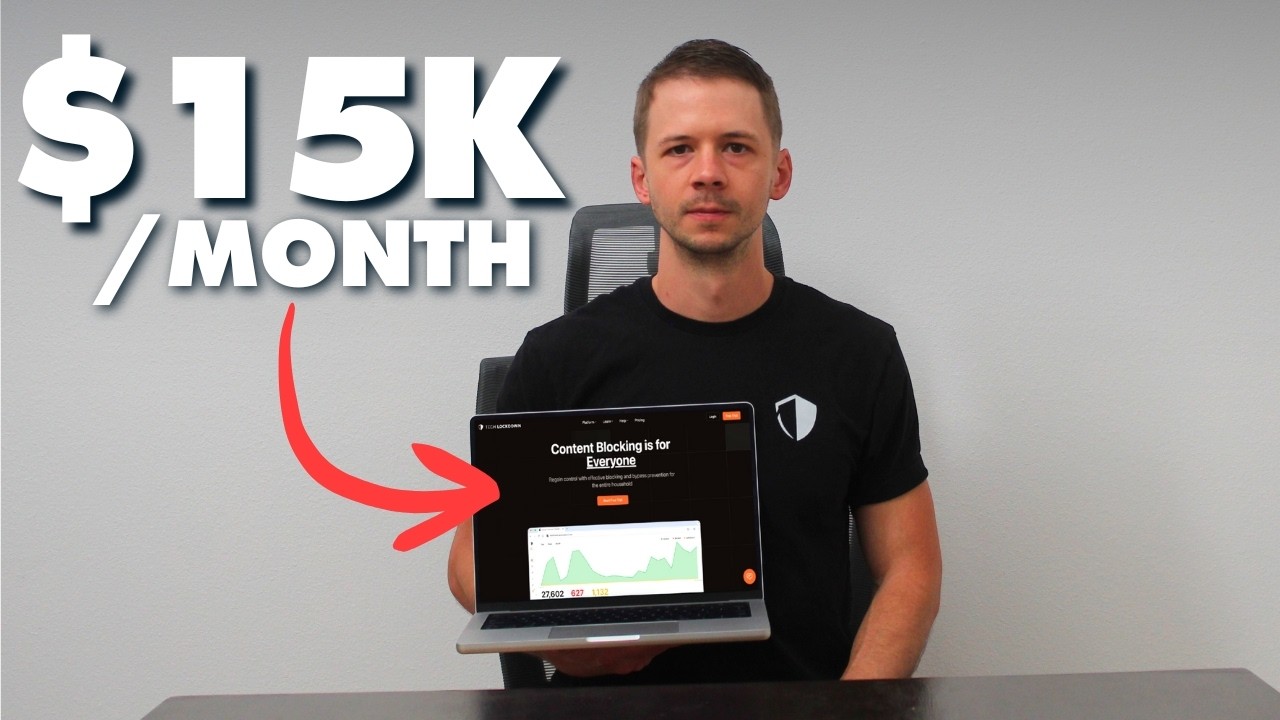
My name is Ben and I turned my sideproject into a full-time job.>> This is Ben, a regular dude in a regular9 to-5 who always wanted to start hisown business. He was always startingdifferent side projects, but nothingreally worked until one day he changedhis entire approach.
Don’t go full-time on your project untilyou do this.>> Once he made this change, he started abusiness that would eventually hit15,000 MR and allow him to workfull-time on his own stuff. The ideafinally started to get traction when Ibrought Ben onto the channel to shareeverything, including what he learnedfrom all his failed side project ideas,why this idea was different, and howwith the right approach, anybody canbuild a side project that makes money.
All right, let’s get into it. I’m PatWalls and this is Starter Story.All right, welcome Ben to Starter Story.Tell me about who you are, what youBuilt, and what’s your story?
My name is Ben Boz, and I’m a softwaredeveloper who created Tech Lockdown.Tech Lockdown is a platform that helpsadults block websites and apps and justbe more intentional with their internetuse. It started out as a side project,but I was actually laid off in 2023, andI had to make the decision to either gofull-time on my side project or accept ajob offer and go back into workingfull-time.
All right. Well, let’s go a little bitdeeper into how Tech Lockdown works.What does this app do, and how does itwork?
The core part of the platform is thecontent policy, which lets you schedulewhen websites and apps are blocked, andyou can use categories or keywords toinstantly block millions of websites andapps. But then, once you set that up, youconnect to your devices using a VPNconnection. You know, your smartphone oryour computer is now using, like, aFiltered internet connection.
Cool. What type of people use TechLockdown? What’s like your typical user?So my typical user, as an adult, they’rejust trying to be more careful with howthey use the internet, and they mighthave developed unwanted habits orcompulsive behaviors. The business modelis a typical SaaS subscription. I have a14-day free trial, which allows people totry things out, set things up, anddecide if it’s a good fit. And then, fromthere, they either pay $15 month-to-month,or they pay basically $10 a month ifthey pay for an annual plan. Ultimately,I want people to buy an annual plan, buta lot of people give up after like amonth. So, I provide that option.
All right. Well, one of the things thatI really think is cool about your story,you had a full-time job, and this was aside project. Have you always beenbuilding side projects?>> Yeah. So, ever since, you know, incollege, I was doing side projects,Messing around with stuff, even when Ihad a full-time job, and I just couldnever shut that side of my brain off.
So, the first failed side project was Imade a lead generation platform forfreelance developers to help them findclients.And I just got way tooobsessive over like the colors on thewebsite and the logo and the the name ofit, and I just didn’t think about thebusiness model enough or how I would getcustomers.So, it just didn’t goanywhere.The next thing I worked on wasa landing page builder.This time Iwasn’t obsessed, but I didn’t reallythink about how I’d launch it and Iburnt myself out before launching it.Iovercomplicated it, and it didn’t goanywhere.
And then I ended upco-founding a web agency with a designerand another developer.I did that forabout 2 and 1/2 years, but it was justreally difficult, a hard business torun. Ultimately, I was glad when weended that business.
Okay. So, you had a few kind of failedside projects that didn’t work out. Howdid you come up with the idea for techlockdown?
Well, it ultimately started back in 2020when work from home became normalized,and everyone was just getting way toomuch internet time. So, I decided to setup guard rails around my own internetuse. I found out that it’s just reallyhard to do that. So, I spent a ton oftime researching and kind of puttingtogether my own system that would workwell for me. And then from that, I justdistilled that into a YouTube videoand a Reddit post. And I was shocked byhow many people were messaging me andemailing me and asking me to consult andall these things. But at that point, Iactually didn’t start monetizing it atall. Kept creating free content andbuilding my audience. About a year later,that is when I actually monetized it.
All right. So, you had built this sideproject. It’s doing well. It has payingCustomers, and then something crazyhappens. What happened?
Well, I got laid off, and I had kind ofalready planned to leave in September ofthat year, but I had to figure out allthese things like, how do you pay forhealth insurance? How expensive is that?The income from Tech Lockdown was like$3,000 at that point, which would nothave covered my expenses. My naturalinstinct was to go back to this, likesafety net, which is a W2 income. But Ifigured I’m only going to get thisopportunity probably once. Let me giveit a good shot. And at least I know thatif I go back and I do an interviewsomewhere, I bet I could get anotherjob. I ended up doubling down on TechLockdown, and I’m glad I did thatbecause it’s grown by 5x since I waslaid off.
What do you think was different aboutTech Lockdown as a side project comparedto your previously failed side projects?>> Well, I think the first thing is that IDidn’t start off trying to make a sideproject. It was genuinely something thatI was passionate about, and I was tryingto solve a problem. I also didn’t overcomplicate the logo and the marketingand all that. I actually didn’t have alogo until I had a few hundredcustomers. So, I was just laser focusedon, if I have any free time, it’s got togo towards the most meaningful stuff.
It was actually really helpful to have anaudience who was really focused on thattopic, too. So, when I actuallyworked on something, I felt like I wasn’t just like throwing something outthere into the ether. I knew thatsomeone would use it eventually. So, itwas really motivating compared towhat I was doing before. I know a lot ofpeople watching this right now mighthave a full-time job. They’re figuringout how do I find the time to build?What should I work on? What hours of theday should I work? Can you break down alittle bit more tactically about how youBuilt this business with limited timeand energy?
I’ve formed a habit of waking up reallyearly in the morning, prioritizing likedevelopment tasks and stuff that justrequired more focus and attention in themorning. So, I would do that, you know,between like 5:30 and 8:00, 8:30. Andthen if I worked on anything in theevening, it might be more like marketingrelated because I could do those kindsof tasks without having to behyperfocused and alert. And I alsostayed really focused on a specificmarketing strategy. If you’re juggling afull-time job and you’re also trying todo customer acquisition throughmarketing, you should pick a channelthat is energizing to you and that youcan do reliably and that you don’t dreaddoing. So, for me, that was contentmarketing, but for other people itliterally might be knocking on doors,talking to customers face to face. Itjust depends on your personality.
That’s awesome. Thanks for sharing allthat. For anyone watching this right nowwho has a side project or they’rethinking about starting a side project,and they have a full-time job, whatwould be your advice to them?
I’d say make sure that you have a way toget customers. I think the customeracquisition problem is a thing you haveto solve before you leave your job. Andyou have to have a plan that you cankind of throw gasoline on, right? If Ihave 40 hours a week to throw at this, Iknow that there’s going to be an extraoutput. I wouldn’t start a side projectjust because you hate your job and youjust want to work for yourself. It’sreally not that glamorous being your ownboss. If you have a problem with yourjob, maybe just make your full-time jobgetting a better one. Start a sideproject when it’s something you’regenuinely passionate about, but youwould almost work on for free if youcouldn’t make money with it. All right,Before we finish Ben’s story, I want tospeak directly to anyone watching thiswho’s stuck in a 9 to 5 and thinking, "I
want to build something, too. I justdon’t know where to start." The truthis, there’s never been a better time tostart a side project. And thanks to AI,you don’t need to spend months learninghow to code. This is why we createdStarter Story Build. It’s ouraccelerator that helps you go from ideato working product in just a coupleweeks. We’ll show you how to guide AI tobuild the app for you. Skip thetutorials and actually launch somethingreal and stay focused and accountableinside a cohort of other builders. Ben’sstory is proof. Side projects can changeyour life, but you have to start. AndStarter Story Build is the best place todo that. If you’re interested, justclick the first link in the descriptionto join. I hope to see you in there.
Now, let’s get back to Ben’s story. Allright. Well, let’s take a dive intoIdeas. You started a bunch of sideproject ideas. A lot of them failed andone was really successful. What would beyour playbook or strategy for finding agood side project idea? For one thing, Iwould pick an idea that you can make avery simple version of that that’s stillcomplete that you can use to validateand bring to market quickly. If the ideathat you’re picking is going to take you2 years to build, there’s no simplifiedversion that you can release. I’m not
sure that I would do it. Another thing Iwould do is start off by building anaudience. Don’t wait to have the productbefore you build the audience. And itneeds to be an audience that’sinterested in that topic, not just likeyour general social media following. Youneed to have like a pretty good customerlist of pre-qualified people that woulduse it. Then you’ll havesomething, uh, an audience to launch toonce you’re ready with a simplifiedversion of your product.
Limited free time and energy, you needto not dread waking up early in themorning to work on your side project. Itneeds to be something you’re genuinelypassionate and excited about so that atthe end of a long workday, you’re notlike resentful of this thing that you’reworking on. You’re excited and ready togo. And maybe you’re even thinking aboutit during the workday because it’s justsomething you’re genuinely into.
Okay, great. Can you break down some ofthe numbers behind this business? Howbig is it? How much money is it making?
In the last 2 years, there have beenover 2 million people that have foundthe site organically either throughGoogle search or referrals or socialchannels. I have 1,300 customers thatgenerate over 15,000 in monthlyrecurring revenue. And then I have amailing list with around 20,000contacts.
All right, cool. So I mean that’s anamazing business that you built. Let’sTalk about actually how you grew thatbusiness. What was the growth andmarketing strategy to go from zero to15K MR?
So my core strategy was just to writereally well researched and helpfulcontent. I’m going to give it away forfree, and it made it really easy forpeople to just share the stuff that Iwas writing. I made a guide on how youcan convert an iPhone into a dumb phonebecause I know there’s this audience ofpeople that are just kind of fed up withtheir smartphone, and they’re tired ofbeing addicted to it. So, I basicallyshowed, with a really detailedstep-by-step guide, how you can make itso that you can only access like a fewkey apps on your iPhone, and like youcan’t even use Safari or anything likethat. That article alone, it’s one ofthe top-performing guides that I’ve everpublished, and it’s been read hundreds ofthousands of times. I also developedthis, a kind of system or an approach.
At least that I could use when promotingcontent or videos on Reddit. And thething with Reddit is you can’t be overlypromotional. So you have to be a littlebit more subtle. So if I made like aYouTube video or I made a guide, I wouldput all of the good stuff in thatReddit post. I would kind of just tackon a reference to like the YouTube video or the guide. But what I found was morepeople engaged with it. So it was morelikely to go to the front page. And thenat the same time, there’s a lot ofpeople that want to explore the topicfurther, and they figure if you’ve gotsome other resource, you probably aretalking about other things. So I thinkthat’s why that ends up working.
Okay. Well, thank you for sharing those.Is there a specific strategy orframework that you have when creating content and what createssuccessful content?
I think a big part of it isauthenticity. A lot of my competitorsAre kind of these faceless apps orcompanies. They look really corporate,but maybe don’t look so trustworthy. Andespecially if you’re doing a sideproject, people don’t know who you are.
You’re not a big company. And it helpsto just put your face on it and own whatyou’re building. And then when I writeabout content, I’m not saying we, I’msaying I. I’m not pretending to be a bigcompany when it’s just me working on aproject.
All right. Well, let’s get into the funstuff. Tech stack. What are the tools,languages, frameworks, and apps that youuse to run this business?>> So, a lot of my tech stack decisionswere based on time constraints. So, alot of my early decisions were thingslike using Supabase for the database and authentication. And then Iwould use simpler web applicationframeworks like SvelteKit, which is alittle more accessible if you’re just aJavaScript developer and you don’t goToo far into React land, I was usingForcell for hosting even though youcould do it cheaper yourself. Uh, $20 amonth is well worth it to have the peace
of mind and a continuous deploymentsystem. I think the most important partof my stack was actually the emailprovider. I use Mail Gun and ElasticEmail. I think I ended up paying about$150 a month, but I email a lot ofpeople. I pay for Google Gemini. I payfor like the light plan for Ahrefs. Iuse Plausible Analytics. Plausible isjust an amazing analytics tool that I, Icheck daily. It’s probably one of themore important optional things that Ipay for, and a lot of the costs are juston the tech stack side of things.
Infrastructure tends to be really cheap,but all in all, like, you should be ableto hit a 70% profit margin easily withall the optional stuff added in.
All right. So, one of the last questionsI want to ask you is, you know, youbuilt a bunch of side projects. WhatHave you learned through building thesethat surprised you?
It’s actually not that hard to makemoney with a side project. The hard partis making it into a viable business.There’s a lot of side projects that arebasically just selling a dollar for 90and when they actually go to scale, itdoesn’t work out and they can’t take itto be a full-time job. It’s less aboutbeing really innovative or inventive.
It’s just coming up with a smartstrategy where your customer acquisitioncost is low enough that you can build itinto a sustainable business and grow itoutside of just yourself. The lastquestion I want to ask you is if youcould stand on Ben’s shoulder when youwere starting all those side projects,when you finally started that successfulone, what advice would you give to youngBen?
Uh, to not overcomplicate things andfind the simplest version of the productto prove the concept first. GettingBogged down in the details leads toburnout and not actually shipping theproduct. What you’ll find with a lot ofside projects is no one ever actuallysees it because it — it never getsshipped. So, distill it down to the corefeature set, test it, build an audience,but don’t overcomplicate it.
Well, that’s great advice. Thank you,Ben, for coming on the channel. I lovethe business you built, solopreneur,building it all yourself. It’s amazing.Congrats, and I hope to see you on thechannel again.
Thanks for having me, Pat.>> I love Ben’s story because it’ssomething that anybody watching thisvideo can do, too. He was just a regularguy with an idea, but the difference washe decided to actually go and build it.He started it on the side, grew itslowly, and eventually went all in. Thatgoes to show you that sometimes all youneed is the willingness to just put inthe work. So, I want to challenge you.
It’s time to start building your sideproject. And the perfect place to startdoing that is inside Starter StoryBuild. We’ll show you how to go from asimple idea to a real working app injust a couple weeks. Hundreds of peoplehave joined and started launching theirfirst apps. It’s really cool to see. So,if you’re interested in taking on thatchallenge, head to the link in thedescription and check out Starter StoryBuild. All right, thank you guys forwatching. I’ll see you in the next one.
Peace.